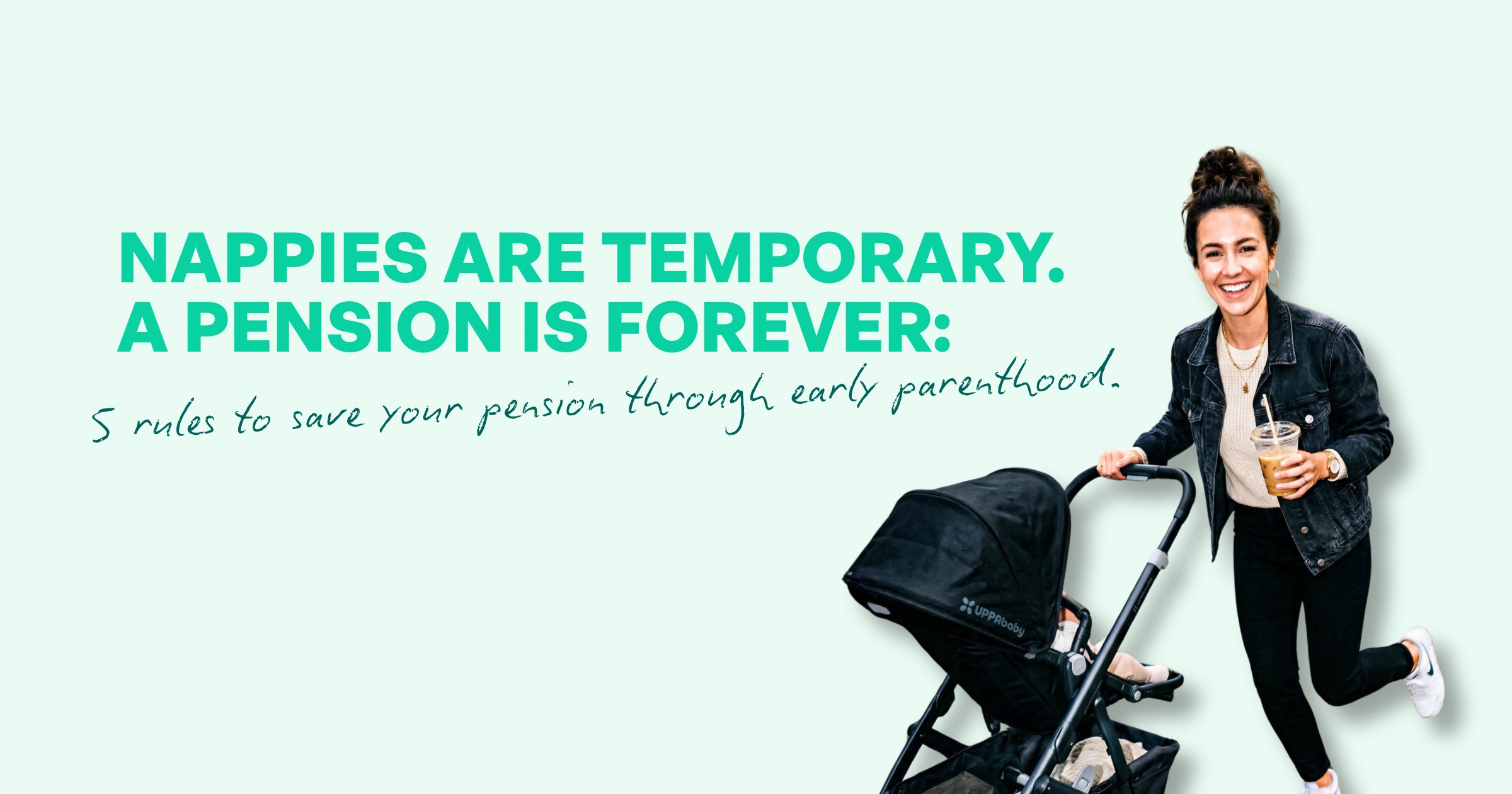
The gender pension gap: why mothers retire with smaller pensions, and what you can do about it

The short answer: The gender pension gap is how much less women have saved in private pensions than men. For people aged 55 to 59 it's 48%: a typical £81,000 for women against £156,000 for men. It opens up in your 30s, mostly because of childcare. The good news is that some free checks can help narrow yours.
If you've taken time off or cut your hours to look after your children, you might be wondering what it's done to your pension. You're far from alone in that. Let's look at where the gap comes from, and the steps that can help close it.
What is the gender pension gap?
It's the difference between the typical private pension savings of women and men. The government measures it by comparing the median pension pots of women and men who haven't started taking them yet. "Median" means the one in the middle, so a few huge pots don't skew the picture.
The latest figures cover 2020 to 2022, and they make for sobering reading:
At ages 55 to 59, the gap was 48%. The woman in the middle had £81,000 and the man in the middle had £156,000.
As a yearly income, that's roughly £6,000 for women and £11,000 for men, a gap of about £5,000 a year.
The gap was smallest at ages 25 to 29 (22%), then grew to 52% at ages 45 to 49.
In other words, by the time retirement is in sight, the typical woman has around half the pension of the typical man.
More recent research points the same way. In September 2026, the Pensions Policy Institute found that women aged 55 to 59 have about 54% of the pension wealth of men the same age, and that the gap for this group has widened over the last two years.
Group (aged 55 to 59) | Gender pension gap |
|---|---|
Everyone with a private pension | 48% |
Only defined benefit (final salary style) pensions | 39% |
Both kinds of pension | 52% |
Only defined contribution (pot) pensions | 75% |
Figures from DWP's Gender Pensions Gap in Private Pensions, 2020 to 2022. They compare medians for people who have some private pension wealth, and leave out the State Pension.
That last row is the one to watch if you're a younger parent. Most new workplace pensions are pot-style pensions, so what you end up with depends on what goes in.
Capital at risk. The value of your pension can go down as well as up, and you may get back less than you pay in.
Why do women have smaller pensions than men?
Mostly because less money goes in during the years when children are small. Women are more likely to work part time, work fewer hours and earn less across their careers. Those differences show up most once women reach their 30s, and they're driven by childcare.
The main causes of the gap will sound familiar to a lot of families:
Women are paid less on average.
They're more likely to work part time or take career breaks, including maternity leave and time off to care for others.
Lower wages can fall below the automatic enrolment thresholds, so a workplace pension may never be set up.
Most people don't share their pensions after a break-up.
There's a sting in the tail, too. Women typically live longer than men, so their savings often need to stretch further.
None of this means you've made a bad choice. Looking after children is real work. It just doesn't come with a pension, so it helps to know where the gaps tend to appear and what can fill them.
How does having children affect my pension?
Usually, less money goes into your pension while you're on leave or working fewer hours. Here's how each stage tends to play out:
Paid maternity leave. You and your employer carry on paying in during paid leave. Your employer pays based on the salary you'd have had if you weren't on leave, but your own payment drops with your pay. Our guide to what happens to your pension on maternity leave goes through it week by week.
Unpaid leave. If your maternity leave becomes unpaid, your employer only has to keep paying in during the first 26 weeks, or for longer if your contract says so. You may be able to keep paying in if you want to, so it's worth checking with your employer or scheme before you go.
Going part time. Your pension is usually a percentage of your pay. Less pay means a smaller amount, even at the same percentage.
Dropping below the threshold. You're only put into a workplace pension automatically if you're aged 22 to State Pension age and earn at least £10,000 a year from that job. Below that, you can usually ask to join, and your employer can't refuse.
Stopping work for a while. Your employer's payments stop when you leave the job, but you may be able to carry on paying in yourself, so it's worth asking your scheme.
How does motherhood affect the gender pay gap and my pension?
Pay gaps tend to grow in the years after children arrive, and pensions follow pay. In April 2026, the gender pay gap for full-time employees was 6.8%. Count part-timers too, and it rises to 12.3% across all employees.
The gap is also at its widest for employees aged 40 and over. Among full-time staff, it was 8.2% at ages 40 to 49, compared with 4.1% at ages 30 to 39.
Why does that matter for your pension? Because the legal minimum is worked out on your pay: 8% in total, with at least 3% from your employer. Many schemes take it from earnings between £6,240 and £50,270 a year. So every pound of pay you lose also trims what goes into your pension.
Example: what going part time does to pension payments
Here's a made-up example to show how it adds up. Sam earns £35,000 a year. Her scheme pays the legal minimum of 8% on earnings between £6,240 and £50,270. After her second child, she moves to three days a week on £21,000.
Full time | Three days a week | |
|---|---|---|
Salary (made up) | £35,000 | £21,000 |
Pay the 8% is worked out on | £28,760 | £14,760 |
Total paid in each year (8%) | £2,300.80 | £1,180.80 |
Difference each year | £1,120 less |
These figures assume the legal minimum on qualifying earnings, no pay rises and no investment growth. Your scheme may pay more, or use your whole salary.
Over five years of part-time work, that's £5,600 less paid in, before any growth. To be clear, that's less money going in, not money taken out of Sam's pot. Still, it shows why a few early checks can be worth the effort. If you're weighing up fewer hours, our guide to how having a child can change your pension goes into more detail.
Does having children count towards your State Pension?
Yes, if you claim Child Benefit. While your child is under 12, claiming Child Benefit gets you National Insurance credits automatically, and those credits count towards your State Pension.
That's well worth having. The full new State Pension is £241.30 a week in 2026/27, and you usually need 35 qualifying years to get it. You need 10 qualifying years to get any at all.
A few things are easy to miss:
Claim even if you don't want the money. If you'd rather not get Child Benefit payments, you can still make a claim and keep the other advantages that come with it.
Credits can move to the parent at home. If your partner claimed Child Benefit but doesn't need the credits, you can apply to transfer them.
Grandparents can get them too. A family member under State Pension age who cares for a child under 12 may get credits, if the parent getting Child Benefit agrees to transfer them.
There's some better news here, too. The flat-rate new State Pension, from 2016, has narrowed the gap in State Pension payments between men and women. Our guide to the UK State Pension explains how qualifying years work.
How can I close my pension gap after maternity leave or part-time work?
Start with what's free or cheap, then look at paying in more if your budget allows. Everyone's situation is different, so we can't say what's right for you. What we can do is walk you through the main options in MoneyHelper's and GOV.UK's free guidance.
Check your State Pension forecast. A free State Pension forecast shows how much you could get and whether you can increase it. If there are gaps, you may be able to pay voluntary contributions to fill them.
Make sure you're in your workplace pension. If you earn under £10,000 from a job, you can usually ask to join. And if you earn over £6,240 a year from that job, your employer must pay in too.
Ask about matching. Some employers put in more if you do, so it's worth asking whether yours offers contribution matching.
Top up after leave. Work out how much less you saved while you were off, and see whether household income could help top it up.
Let a partner pay in. If someone else, such as your partner, pays into your pension, you still get basic-rate tax relief if your provider claims it. You can get relief on up to 100% of your earnings. With no earnings, you can get relief on up to £2,880 a year, which is topped up to the £3,600 "basic amount" in a relief at source scheme.
Include pensions in any separation. Pensions should always be part of a divorce or separation agreement, and they don't have to be split equally. Our guide to pensions and divorce covers the options.
Tax treatment depends on the individual circumstances of each client and may be subject to change in future.
Option | What it costs you | What it helps |
|---|---|---|
Claim Child Benefit (even if you opt out of payments) | Nothing | State Pension |
Transfer credits to a partner or grandparent | Nothing | State Pension |
Join your workplace pension | Your share of contributions | Workplace pension |
Ask about employer matching | Your extra contribution | Workplace pension |
Partner pays into your pension | Household money | Private pension |
Voluntary National Insurance | A one-off payment | State Pension |
Based on GOV.UK and MoneyHelper, checked 25 November 2026. What's available depends on your circumstances and your scheme.
If that feels like a lot, you don't have to do it all at once. Picking one check to start with, like your State Pension forecast, is a good first step.
Want to see what a gap might look like over time? The flexible pension calculator shows how a pension can grow when income changes. Just bear in mind that pensions are long-term: you normally can't take money out until at least 55, rising to 57 from 6 April 2028.
Still got questions?
Is the gender pension gap getting smaller? It depends how you measure it. Automatic enrolment has evened out how many eligible men and women save into workplace pensions in the private sector. But the Pensions Policy Institute found the gap at ages 55 to 59 has widened over the last two years.
Does the gender pension gap include the State Pension? No. The 48% figure covers private pensions only, such as workplace and personal pensions.
Is there still a gender pay gap in the UK? Yes. The ONS put it at 6.8% for full-time employees and 12.3% for all employees in April 2026.
Can a grandparent get State Pension credits for looking after my child? They may. A family member under State Pension age who cares for a child under 12 can apply for credits, if the parent getting Child Benefit agrees to transfer them.
I'm self-employed. Do I get a workplace pension? No, automatic enrolment is for workers with an employer. If you don't have an employer, you can start your own pension and decide how much and how often to pay in.
Where can I get free help with my pension? MoneyHelper offers free pension guidance by webchat, WhatsApp or phone. For a personal recommendation, you'd need a regulated financial adviser.
Sources
- DWP: Gender Pensions Gap in Private Pensions, 2020 to 2022 (21 July 2025)
- Pensions Policy Institute: The Underpensioned, Updating the Gender Pension Gap (15 September 2026)
- Professional Pensions: Gender pension gap widens for those nearing retirement, finds PPI analysis (15 September 2026)
- ONS: Gender pay gap in the UK, 2026 (22 October 2026)
- MoneyHelper: Ways to close the gender pensions gap (checked 25 November 2026)
- GOV.UK: Workplace pensions, changing jobs and taking leave (checked 25 November 2026)
- GOV.UK: Workplace pensions, joining a workplace pension (checked 25 November 2026)
- GOV.UK: Workplace pensions, what you, your employer and the government pay (checked 25 November 2026)
- GOV.UK: Child Benefit (checked 25 November 2026)
- GOV.UK: National Insurance credits, eligibility (checked 25 November 2026)
- GOV.UK: The new State Pension, what you'll get (checked 25 November 2026)
- GOV.UK: The new State Pension, eligibility (checked 25 November 2026)
- GOV.UK: Check your State Pension forecast (checked 25 November 2026)
- GOV.UK: Voluntary National Insurance (checked 25 November 2026)
- GOV.UK: Tax on your private pension, pension tax relief (checked 25 November 2026)
- HMRC: Pensions Tax Manual, PTM044100 (checked 25 November 2026)
- GOV.UK: Increasing normal minimum pension age (checked 25 November 2026)