Pensions through early parenthood: career breaks and paying into your partner's pension
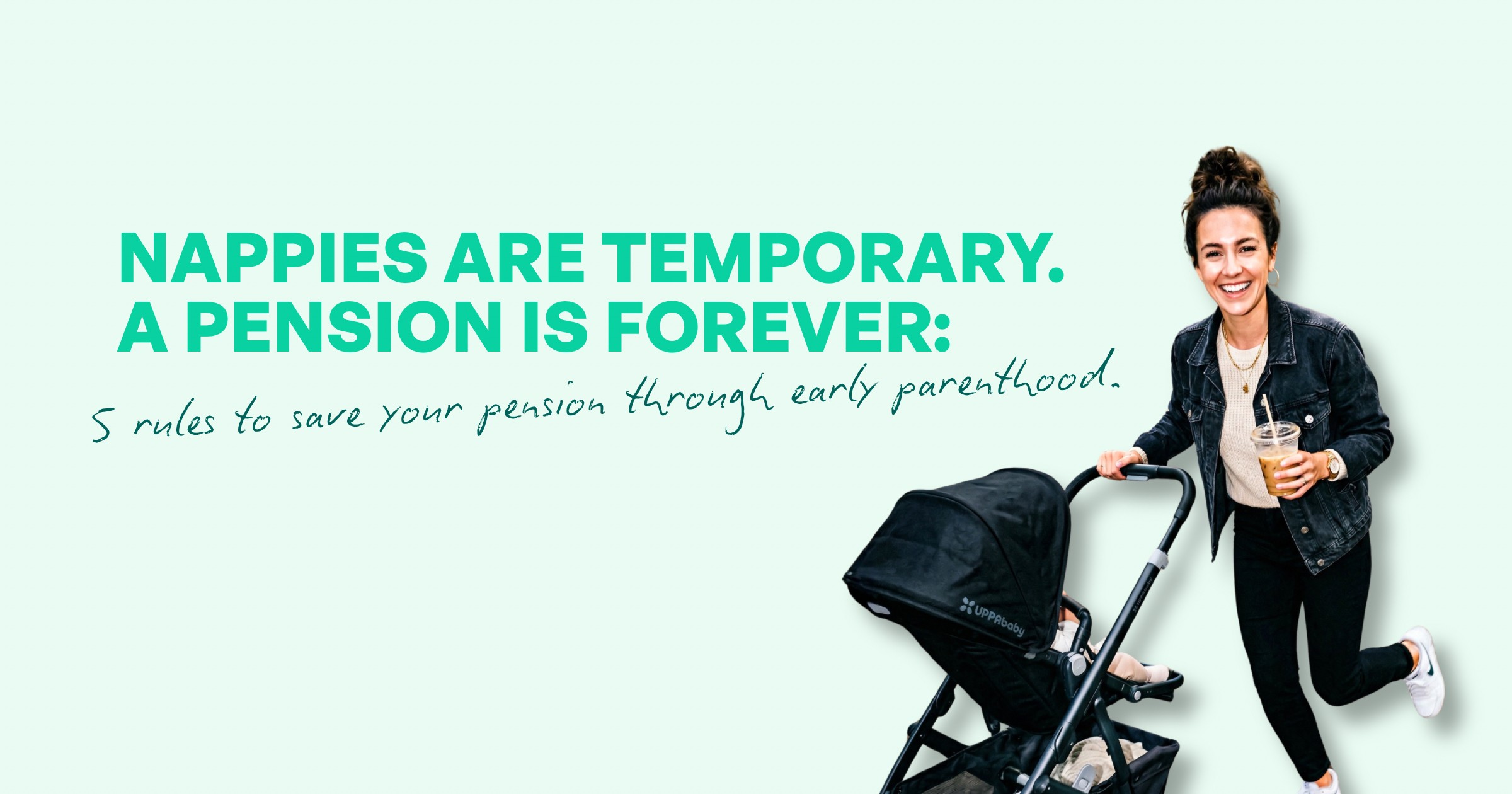
The short answer: Yes. You can pay into your partner's pension while they're at home with the kids. In 2026/27, someone with no earnings can pay in up to £2,880 a year and the government tops it up to £3,600. On paid parental leave, employers keep paying in. Claiming Child Benefit protects your State Pension.
Can I pay into my partner's pension?
Yes. HMRC rules let a pension payment be made by the member or by someone else on their behalf. So if your partner is a stay-at-home parent, you can pay into a pension in their name.
The tax relief belongs to them, not you. When someone else, for example your partner, pays into your pension, you still get 20% relief if your provider claims it for you. That's called relief at source, and it's how all personal and stakeholder pensions work.
MoneyHelper suggests two ways to do it:
If your partner has a pension they set up themselves, you can usually pay straight into it, as a one-off or regularly.
If they have a workplace pension, they could raise their own payments while you cover more of the household bills.
Why bother? Because the pensions gap between men and women is big. The DWP found that people aged 55 to 59 in 2020 to 2022 had median pension savings of £81,000 for women and £156,000 for men, a gap of 48%. It says the differences in work and pay show most once women reach their 30s, a trend driven by childcare.
Capital at risk. The value of your pension can go down as well as up, and you may get back less than you pay in.
Tax treatment depends on the individual circumstances of each client and may be subject to change in future.
Who can pay into a pension, and what tax relief applies?
The rules depend on whose pension it is and whether that person has earnings. Here's a quick guide for 2026/27.
Who's paying in | Into whose pension | Tax relief, and the limit |
|---|---|---|
You, with no earnings | Your own personal pension | 20% added. Pay in up to £2,880 and it becomes £3,600 |
You, with earnings | Your own pension | Relief on up to 100% of your earnings, within the £60,000 annual allowance |
Your partner, parent or anyone else | Your personal pension | Relief goes to you, at 20%, within your own limit |
Your employer | Your workplace pension | Not limited by your pay, but it counts towards the £60,000 allowance |
You, for your child | A pension in your child's name | Your child gets 20% added, up to the £3,600 limit |
Based on GOV.UK: Tax on your private pension, HMRC's Pensions Tax Manual and MoneyHelper's guide to personal pensions, checked 6 October 2026. Assumes a UK resident under 75 and a pension that uses relief at source.
The small print:
The £3,600 is called the basic amount. Relief on payments above your earnings, up to that amount, only works in relief at source schemes.
You get relief each tax year until you're 75.
If you pay tax at 40%, you can claim the extra 20% through Self Assessment on your own payments.
You can open a pension for someone younger, often to save for a child or grandchild.
What happens to my workplace pension on parental leave?
On paid leave, your employer keeps paying in based on your normal salary. Your own payments drop with your pay. GOV.UK says your employer pays based on the salary you'd have got if you weren't on leave.
MoneyHelper sets out what usually happens week by week:
Weeks | If your leave is paid by your employer | If it isn't (for example, Maternity Allowance) |
|---|---|---|
1 to 26 | Employer pays on your pre-leave pay. You pay on your actual pay | Employer pays on your pre-leave pay. Your payments usually stop |
27 to 39 | Same as above | Usually stop, unless your contract or scheme says otherwise |
40 to 52 | Usually stop, unless your contract or scheme says otherwise | Usually stop |
Based on MoneyHelper and GOV.UK: Workplace pensions, checked 6 October 2026. Your employer's policy may be more generous.
Even on unpaid leave, your employer still has to pay in for the first 26 weeks. After that, it depends on your contract. MoneyHelper also warns that mistakes are common, such as payments based on your reduced pay. So it's worth checking your payslips. Our guide to your pension on maternity leave goes into more detail.
How do I keep my pension going on a career break?
You have more options than you might think, even with no income at all. Most of them cost little or nothing.
Keep paying something in. With no earnings, you can pay up to £2,880 a year and get tax relief. Your partner or a relative can pay it for you.
Ask about paying in during unpaid leave. GOV.UK says you may be able to pay into your workplace pension during unpaid leave. Check with your employer or scheme.
Claim Child Benefit, even if you opt out of the money. You get National Insurance credits automatically while your child is under 12. You can opt out of the payments and still get the credits.
Move credits to the parent at home. If the higher earner claims Child Benefit and doesn't need the credits, their partner can apply to transfer them.
Buy back lost pension in the public sector. In the Local Government Pension Scheme, if you elect within 30 days of going back, your employer pays two thirds of the cost of the pension lost during unpaid leave. Miss the 30 days and you pay it all. Other public sector schemes have their own rules, so ask yours.
Why the credits matter: you need 35 qualifying years for the full new State Pension of £241.30 a week, and 10 to get any at all. A few years at home can leave gaps if nobody claims.
What should I look for in a pension during a career break?
There's no single best pension for parents on a break. Look for one whose fees and payment rules fit a few quiet years. MoneyHelper says the main types differ on fees, investment choice and minimum payments. It also notes there are no comparison sites for personal pensions, so you'll need to compare yourself.
When you compare, look at:
Fees. On a £30,000 pot, a 0.75% fee costs £225 a year. At 0.3% it's £90. Some providers charge a flat fee instead.
Penalties for stopping. Some older schemes raise their fees if you stop paying in. That matters if you're pausing.
Minimum payments. Some providers set a monthly minimum. Stakeholder pensions have capped charges and lower minimums.
Family top-ups. Check that a partner or grandparent can pay in easily, as a one-off or by direct debit.
Relief at source. If you have no earnings, the pension must use relief at source to get the top-up to £3,600.
If you have a workplace pension already, MoneyHelper notes that workplace and stakeholder pensions are usually cheaper than personal pensions you set up yourself. You can keep it and add a personal pension alongside.
Can I catch up on my pension when I go back to work?
Often, yes. If you paid in less while at home, you may have unused allowance to use later. Carry forward lets you use unused annual allowance from the previous 3 tax years.
The catch: you must have been a member of a registered pension scheme in each year you carry from. Being a member counts, even if nothing went in that year. The annual allowance was £60,000 in each year from 2023/24 to 2026/27.
There's a second limit, though. Tax relief on your own payments is capped at 100% of your earnings that year. So if you earn £30,000 in your first year back, that's the most you can pay in yourself with relief. Your employer isn't held to that cap, but its payments still count towards the allowance. The allowance is also lower for very high earners, and if you go over it, you pay tax.
If you're going back part-time, MoneyHelper suggests checking whether your employer will match a higher payment rate.
How can pension payments help if you earn near £100,000?
Paying into a pension lowers your adjusted net income, which is the figure these childcare limits use. That can keep you under £100,000.
Above £100,000 of adjusted net income, three things change:
Your Personal Allowance shrinks by £1 for every £2 over £100,000, until it's gone at £125,140.
You lose 30 hours of free childcare for children aged 9 months to 4 years in England. Children aged 3 to 4 still get 15 hours.
You lose Tax-Free Childcare, worth up to £2,000 a year per child.
The limit applies if either you or your partner goes over. For a relief at source pension, you take off the grossed-up payment: £1.25 for every £1 you pay in.
Example: just over the £100,000 line
These are made-up, round numbers. Sam's adjusted net income is £102,000. Sam pays £1,600 into a personal pension, and the provider adds £400. Sam's adjusted net income falls by the grossed-up £2,000, to £100,000. That's no longer over the limit, so the family keeps 30 hours and Tax-Free Childcare, and Sam keeps the full Personal Allowance.
Example: a year at home, worked through
Also made-up numbers. Priya stays home with the kids for a year and has no earnings. Her partner, Tom, pays £240 a month into Priya's personal pension.
Amount | |
|---|---|
Tom pays in over the year | £2,880 |
Tax relief added (20% of £3,600) | £720 |
Total in Priya's pension | £3,600 |
Priya also registers for Child Benefit, so her year counts towards her State Pension. Tom gets no tax relief himself. The top-up goes into Priya's pot. And it's invested, so it can go up or down.
What can I do now?
A few quick checks, each about as long as a cup of tea:
Check your payslips on leave. Your employer's payments should be based on your normal pay.
Register for Child Benefit, even if you'll opt out of the payments.
If you're at home, look at whether your partner can pay into your pension.
In the public sector, put the 30-day buy-back deadline in your diary for your first week back.
Check your State Pension forecast to spot any gaps.
Plan your leave with our maternity leave planner.
Everyone's situation is different, so we can't say what's right for you. If you'd like a personal answer, MoneyHelper's free pension guidance is a good place to start.
A note from us: Chest is a pension app that turns cashback from everyday spending into pension savings. You can read how Chest works.
Still got questions?
Can I get tax relief on pension payments when I'm not earning on maternity leave? Yes. If you have no earnings, you can pay in up to £2,880 and get it topped up to £3,600, as long as your pension uses relief at source. If you have some earnings, the limit is 100% of your earnings, or £3,600 if that's higher.
Does Statutory Maternity Pay count towards my State Pension? Usually, yes. MoneyHelper says you can usually claim free credits if you get Statutory Maternity, Paternity or Adoption Pay.
Can grandparents pay into my child's pension? Yes. MoneyHelper says you can open a pension on behalf of someone younger, often for a child or grandchild, and HMRC lets anyone pay in on the member's behalf. Tax relief still stops at the £3,600 limit for the child.
When can my partner take money out of their pension? Usually from 55, rising to 57 from 6 April 2028, unless they retire early through ill health.
Is it better to pay into my own pension or my partner's? We can't say what suits your family. It depends on your tax rates, your existing pensions and your plans. MoneyHelper suggests reviewing your pensions together, and its pension specialists can talk it through for free.
What if I've already missed the public sector 30-day window? You can still buy back lost pension in the LGPS, but you pay the whole cost unless your employer agrees to help.

Sources
HMRC: Pensions Tax Manual PTM044100, contributions qualifying for tax relief (fetched 6 October 2026)
HMRC: Pensions Tax Manual PTM055100, carry forward (fetched 6 October 2026)
GOV.UK: Tax on your private pension, Tax relief (fetched 6 October 2026)
GOV.UK: Tax on your private pension, Annual allowance (fetched 6 October 2026)
HMRC: Pension schemes rates and allowances (fetched 6 October 2026)
GOV.UK: Workplace pensions, Changing jobs and taking leave (fetched 6 October 2026)
GOV.UK: Child Benefit (fetched 6 October 2026)
GOV.UK: National Insurance credits (fetched 6 October 2026)
GOV.UK: The new State Pension (fetched 6 October 2026)
GOV.UK: Income Tax rates and Personal Allowances (fetched 6 October 2026)
HMRC: Adjusted net income (fetched 6 October 2026)
GOV.UK: Free childcare if you're working (fetched 6 October 2026)
GOV.UK: Tax-Free Childcare (fetched 6 October 2026)
HMRC: Increasing normal minimum pension age (fetched 6 October 2026)
DWP: Gender pensions gap in private pensions, 2020 to 2022 (21 July 2025, fetched 6 October 2026)
MoneyHelper: What happens to my workplace pension during maternity or paternity leave? (fetched 6 October 2026)
MoneyHelper: Ways to close the gender pensions gap (fetched 6 October 2026)
MoneyHelper: Personal pensions (fetched 6 October 2026)
MoneyHelper: Pension scheme fees and charges (fetched 6 October 2026)
Highland Pension Fund: Buying lost pension (fetched 6 October 2026)
Shropshire County Pension Fund: APCs and SCAPCs (fetched 6 October 2026)
Chest: homepage (fetched 6 October 2026)


